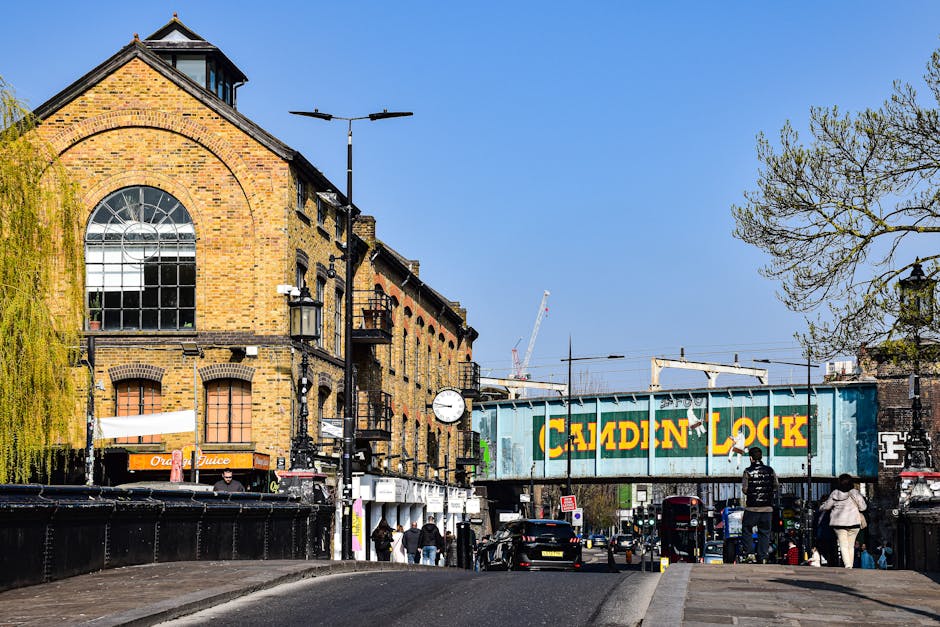
Avoid hidden charges in Camden removals what to check

Moving home or office in Camden can feel busy enough without a surprise fee landing on your quote at the last minute. If you are trying to avoid hidden charges in Camden removals what to check, the real goal is simple: understand what you are paying for before the van turns up outside your building, the keys are ready, and everyone is trying to make the clock work. In practice, that means checking the quote line by line, asking the slightly awkward questions, and spotting the bits that are easy to miss when you are juggling boxes, council parking worries, and a hundred small decisions all at once.
Truth be told, most removal problems do not begin with bad lifting or poor planning. They begin with vague pricing. This guide walks you through the checks that matter, the charges people often overlook, and the best way to compare removal companies without getting caught out. If you want a calmer move and a fairer bill, you are in the right place.
Why hidden charges matter in Camden removals
Camden has its own moving quirks. Narrow streets, permit pressure, busy high roads, basement flats, top-floor walk-ups, and the occasional awkward loading bay all make removals a little more complicated than a plain point-A-to-point-B job. That is exactly why hidden charges can creep in. A quote may look fine at first glance, then extra costs appear for stairs, long carries, waiting time, congestion, weekend work, packing materials, or parking arrangements.
And here is the tricky bit: some of those costs are legitimate if they were clearly explained upfront. Others are just a sign the quote was deliberately vague. The difference matters. If a company has not broken down its pricing clearly, you may be paying for assumptions instead of actual work. That is a headache nobody needs on moving day, when the kettle is packed and the dog is under the sofa.
For Camden moves especially, clarity around access is crucial. A short distance can still take longer if a van cannot park close by, if there is no lift, or if items have to be carried through tight communal areas. A good mover should explain those realities before you book, not after the bill arrives.
How hidden charges in Camden removals appear in a quote
Hidden charges usually appear in one of three ways: they are omitted from the initial quote, they are described vaguely, or they are added later because the moving team says the job was more difficult than expected. None of that is unusual in the removals world, but it becomes a problem when the customer was never given a fair chance to understand the price.
A proper quote should tell you what is included, what is not included, and what would change the price. For example, if you live in a third-floor flat with no lift, the company should mention whether carrying items upstairs is included or whether extra labour might apply. The same goes for parking restrictions, waiting time, dismantling furniture, or wrapping fragile items. If those details are skipped, the quote is not really complete.
In a Camden context, common price surprises often involve access and timing. A van may need to park further away than expected. A removal team may have to work around school run traffic or busy residential streets. Sometimes the building itself is the issue, with narrow stairwells or awkward turns that slow things down. None of this is scandalous. It just needs to be priced honestly.
Practical rule: if a removals quote sounds unusually simple for a complicated Camden move, ask what assumptions the price is based on. Simplicity is lovely; surprise fees are not.
Key benefits and practical advantages
Checking for hidden charges is not just about saving money, although that is obviously a big part of it. It also gives you more control over the move itself. Once you know what is included, you can plan packing, access, timings, and insurance more sensibly. You stop guessing, which is a relief on its own.
- Clearer budgeting: you can plan the move without leaving a mystery amount in reserve.
- Fewer last-minute arguments: both sides know what was agreed before the van arrives.
- Better comparison: you can compare companies on a like-for-like basis instead of chasing the cheapest headline figure.
- Less stress on moving day: no awkward conversation about "unexpected" extras while boxes are being loaded.
- More trust: transparent pricing is usually a strong sign of a professional operation.
There is another advantage people do not always mention. Clear pricing often reveals how the company thinks about service quality. A mover that explains access, labour, insurance, and packing properly is usually better organised than one that just fires over a one-line figure and hopes for the best. That little detail matters, especially when you are trusting someone with all your furniture and a fair amount of your sanity.
Who this is for and when it makes sense
This advice is for anyone moving in or around Camden, but it is especially useful if you are dealing with one of the following situations:
- a flat move with stairs or no lift
- a short-notice move where timing is tight
- a home with bulky or fragile items
- a busy street or restricted parking near the property
- a student or shared-house move where the contents list keeps changing
- an office move that needs planning around opening hours
- any move where you are comparing several removal companies and trying to make sense of the price difference
If you only have a few light bags and a short walk to the van, the risk of hidden charges is lower. But once access, labour time, packing, or fragile items enter the picture, the quote needs proper scrutiny. That is especially true if you are considering services such as man with van support, a full home move, or specialist help like flat removals.
To be fair, no one wants to spend a whole evening reading terms and conditions before moving day. But one focused check now can save a lot of irritation later. And yes, it is much easier than arguing over a stair fee while someone is holding your wardrobe at the bottom of the steps.
Step-by-step guidance
Here is the simplest way to check for hidden charges without turning the process into a research project.
- Ask for a written quote. A verbal estimate is too easy to misunderstand. You want something you can read calmly later.
- Check what the base price includes. Is it labour only, or does it include loading, transport, unloading, and waiting time?
- Confirm access details. Tell them about stairs, lifts, long carries, road restrictions, and parking conditions. Camden buildings are not exactly known for generous loading space.
- Ask about extra charges. Common ones include fuel, congestion-related time, out-of-hours work, heavy items, extra floors, and packing materials.
- Confirm the volume of goods. If you are moving more than you first estimated, the price may change. Be honest about how much there is.
- Check insurance and liability terms. You need to know what level of protection is included and what exclusions apply.
- Ask how delays are charged. Waiting time, access issues, or late handovers can all affect the final bill.
- Read the cancellation and amendment rules. Plans change. Sometimes very fast.
- Compare at least two or three quotes. Use the same details for each company so the comparison is fair.
- Keep the final agreement in writing. Email is fine. Screenshot it if you like. Old-fashioned? Maybe. Effective? Absolutely.
If you are booking extra help such as packing and unpacking services or packing and boxes, ask how those services are charged. Some companies price by hour, some by job, and some by the number of items. The method matters almost as much as the number.
A useful test is this: could a stranger who was not on the phone with you understand the quote? If not, ask for a cleaner breakdown.
Expert tips for better results
In our experience, the easiest way to avoid hidden charges is not to look for the lowest quote first. Look for the clearest one. Cheap can be fine, but vague cheap is where the trouble usually starts.
Tip 1: describe your move like you are trying to make it boring. That sounds odd, but it works. Give the company all the unglamorous details: parking, stairs, awkward corners, heavy sofas, plants that always look lighter than they are. The more ordinary the description, the less room there is for surprise.
Tip 2: send photos or a short video if asked. Many removers can quote more accurately if they can see access points, room size, and item count. A quick video by the front door and staircase can be worth a lot. It takes two minutes. Less than making tea, even.
Tip 3: separate essential services from optional add-ons. Not every move needs dismantling, wrapping, storage, or same-day turnaround. If you do need them, fine. If not, do not let them quietly drift onto the quote. Optional extras are where budgets go to wander off.
Tip 4: check whether the company offers the right vehicle for the job. A van that is too small can lead to multiple trips, extra labour, and wasted time. A well-matched vehicle, or even a removal van suited to your move, often reduces the risk of add-on costs later.
Tip 5: ask for the pricing logic, not just the total. If a company explains why a charge exists, that is a healthy sign. If they dodge the question, take note.
One more thing. If you are moving a specialist item, such as a piano, ask for a separate discussion early. Specialist handling is not a "we'll see on the day" type of job. A better mover will talk openly about piano removals and similar items from the start.
Common mistakes to avoid
Most hidden charges are not the result of one huge error. They come from several smaller oversights that pile up. Here are the ones worth avoiding.
- Only comparing the headline price. A low total means little if it excludes labour, materials, or waiting time.
- Forgetting to mention access issues. A ground-floor assumption for a top-floor flat is a fast route to extra charges.
- Assuming packing is included. It often is not, unless the quote says so.
- Not checking insurance wording. "Covered" can mean different things in different quotes.
- Leaving parking until the day before. In Camden, that is a risky habit. Very risky.
- Changing the inventory after quoting. More items usually mean more time, more space, or both.
- Not reading cancellation terms. Life happens. Charges for changes should be clear before you need them.
The biggest one, though, is this: people often feel awkward asking direct questions. Do not. A professional removals company should expect them. If a provider seems irritated by reasonable pricing questions, that tells you quite a lot.
Tools, resources and recommendations
You do not need complicated software to protect yourself from hidden fees. A few simple tools are enough.
- A move inventory list: write down every major item, room by room. It keeps quotes honest.
- Phone photos or a walkthrough video: especially helpful for stairs, lifts, tight corners, and parking access.
- A comparison note: keep each quote in one place so you can compare inclusion, exclusions, and timings.
- A question checklist: use the same questions for every company. Consistency makes comparison much easier.
- Policy pages: if you want to understand how a company handles trust and customer service, review pages such as insurance and safety, terms and conditions, and payment and security.
If sustainability matters to you, you may also want to check whether packing waste is handled responsibly. A company that talks openly about recycling and sustainability is often more thoughtful about the full service, not just the headline price.
And yes, if you prefer to read the company story before booking, that can help too. A straightforward about us page often gives a better sense of how they operate than a polished sales pitch ever will.
Law, compliance and best practice
Removal services in the UK are not all governed in exactly the same way, but good practice still matters. A trustworthy removal company should be clear about its terms, transparent about payment, careful about handling goods, and honest about what happens if the job changes on the day. That is the baseline, really.
If a move involves work in shared buildings, or tight access where there may be risk to walls, floors, or furniture, the company should think about health and safety properly. This is not just box-ticking. It is about reducing damage and preventing avoidable accidents. A sensible provider will have a documented approach, and if you want reassurance, reviewing their health and safety policy can be a good signpost.
Insurance is another one. The exact level of cover and exclusions can vary, so do not assume every item is protected in every situation. Ask what is covered during loading, transit, and unloading, and ask what happens if access conditions were not as described. That is the sort of detail that saves arguments later.
For business moves, there is also a best-practice expectation around timing, confidentiality, and minimising disruption. If you are moving an office, check whether the provider understands the rhythm of commercial work rather than treating it like a domestic move with chairs in it. For many companies, a dedicated office removals approach is simply more practical.
One more practical point: payment terms should be clear before work begins. Deposit rules, final balances, card handling, and invoice timing should all be stated plainly. No one enjoys finding that out while the sofa is already halfway through the doorway.
Options and comparison table
If you are trying to keep costs under control, it helps to compare the common service approaches side by side. Not every move needs the same setup, and the cheapest option on paper is not always the cheapest in real life.
| Option | Best for | Typical risk of hidden charges | What to check first |
|---|---|---|---|
| Man and van | Small moves, single-room loads, short local moves | Medium | Waiting time, stairs, number of trips, loading distance |
| Full house removals | Larger family moves, many items, complex access | Medium to high | Packing, insurance, dismantling, timing, parking arrangements |
| Flat removals | Flats, maisonettes, buildings with lifts or stair access | High if access is unclear | Floor level, lift size, stair width, porter rules, long carries |
| Specialist removals | Pianos, heavy furniture, fragile items | High unless assessed properly | Handling method, extra labour, equipment, insurance terms |
| Storage + move | Delayed completion, temporary gap, decluttering | Medium | Storage duration, access charges, collection and redelivery fees |
If you are unsure which route fits your situation, start with the facts of the move rather than the price. How many items? How many stairs? How much time? Those details usually tell you the right service before the sales pitch does.
Case study or real-world example
Here is a straightforward example from a typical Camden-style move. A couple booked a quote for a one-bedroom flat with a sofa, bed, wardrobe, several boxes, and a bike. The first price they received looked attractive. It was low enough to catch the eye, which is exactly the problem. On closer reading, it excluded packing materials, had limited labour time, and assumed easy parking directly outside the building.
That last assumption was the giveaway. Their road had restricted parking and fairly constant traffic. The building was on an upper floor with no lift. Once they shared those details, the quote changed. Not wildly, but enough to matter. The revised price was more realistic and, crucially, there were no surprise additions on moving day because everything had been clarified early.
What did they learn? The cheapest number was not the best number. The clearer number was. They also said the most useful part of the process was being asked for a photo of the staircase and entrance. That small request flagged the access issue before it became a problem. Simple, really, but easy to overlook when you are busy.
That is the heart of it: hidden charges usually fade away when the job is described properly. The more precise the information, the less room there is for "unexpected" extras. Funny how that works.
Practical checklist
Use this checklist before you book. If you can tick most of these off, you are in a much stronger position.
- Do I have a written quote?
- Does the quote list exactly what is included?
- Have I explained stairs, lifts, and access restrictions?
- Have I confirmed parking and loading details?
- Do I know whether packing materials are extra?
- Have I asked about waiting time and overtime charges?
- Do I understand what insurance is included?
- Have I checked cancellation and amendment terms?
- Have I compared the same details across more than one company?
- Have I shared an accurate inventory of items?
- Have I checked whether specialist items need separate handling?
- Have I saved the final agreement somewhere easy to find?
If one or two answers are unclear, pause. Ask again. Better to spend ten minutes now than lose an hour later trying to decode a bill that has drifted away from the original quote.
Conclusion
To avoid hidden charges in Camden removals, what you really need to check is clarity: the quote, the access details, the exclusions, the timing rules, and the insurance terms. Once those pieces are visible, the move becomes much easier to manage. You are no longer dealing with guesswork. You are making decisions on solid ground.
That is good for your budget, but it is also good for your nerves. And let's face it, moving day has enough going on without anyone inventing extra costs at the kerbside. A careful quote, a few direct questions, and a proper comparison can make all the difference between a messy surprise and a move that feels under control.
Get a free quote today and see how much you can save.
When the boxes are stacked and the door finally closes behind you, it is a relief to know the numbers made sense from the start. That quiet feeling of being on top of it matters more than people think.
Frequently Asked Questions
What hidden charges should I look for in Camden removals?
The most common ones are stair fees, waiting time, long-carry charges, parking-related extras, packing materials, dismantling or reassembly, fuel adjustments, and extra labour for bulky items. The key is not just spotting them, but making sure they are clearly explained before you agree to the job.
How do I know if a removals quote is trustworthy?
A trustworthy quote usually lists what is included, what is excluded, and what could change the price. It should also reflect the real access conditions at both properties. If the quote is vague, or if the company avoids direct answers, treat that as a warning sign.
Should I choose the cheapest quote?
Not on price alone. Cheapest can be fine if the service is properly defined, but a very low quote sometimes means something important has been left out. Compare the scope, not just the total.
Do removals companies charge extra for stairs?
Some do, especially if there are several flights or if the move involves awkward access. Others include stairs in the standard price if they knew about them in advance. Always ask, because a staircase can change the job more than people expect.
How can I avoid parking charges or access fees?
Give the company full parking and access details before booking. In Camden, this is especially important because restricted streets and limited loading space can affect timing and cost. If the mover needs to plan permits or a longer carry, that should be discussed upfront.
Is packing usually included in removal quotes?
Not always. Some quotes include only transport and loading, while packing is a separate service. If you want boxes, wrapping, or full packing support, ask whether it is priced per hour, per room, or as a fixed add-on.
What should I check about insurance?
Ask what level of cover is provided, what items are excluded, and whether cover applies during loading, transit, and unloading. Insurance wording can be a bit dry, but it matters a lot if something goes wrong.
Do I need a written removal agreement?
Yes, ideally. A written agreement or email confirmation helps avoid misunderstandings about price, timing, access, and service scope. It does not need to be complicated. It just needs to be clear.
How far in advance should I book a Camden removal company?
As early as you can, especially if you are moving at a busy time of month or need a weekend slot. Early booking also gives you time to compare quotes properly and sort out any access issues before moving day.
Are man and van services more likely to have hidden fees?
They can be if the details are not clear, because pricing is sometimes based on time, loading distance, or the exact size of the job. A good man and van provider should still be upfront about what is included and what could add to the cost.
What should I ask before booking a flat move?
Ask about floor level, lift access, communal rules, stairs, long carries, and whether bulky furniture needs special handling. If the building is tight or awkward, say so early. Flat moves often need more detail than people first realise.
What is the best way to compare removal quotes fairly?
Use the same inventory, the same access details, and the same dates for every company. Then compare what each quote includes, not just the total figure. That is the fairest way to see who is actually offering value.
Can I reduce removal costs without cutting corners?
Yes. Declutter before moving, pack what you safely can yourself, give accurate access information, and book early enough to avoid rush pricing. Small steps add up. They really do.
Who should I contact if I have a complaint about charges?
Start by raising it with the company directly and keep everything in writing. If the provider has a published process, use it. You can also check their complaints procedure so you know the proper route to follow.
Where can I get more information before booking?
Look through the company's service pages and policy pages so you understand pricing, service scope, and terms before you commit. A quick review of pages like pricing and quotes and removal services can be a helpful starting point.